


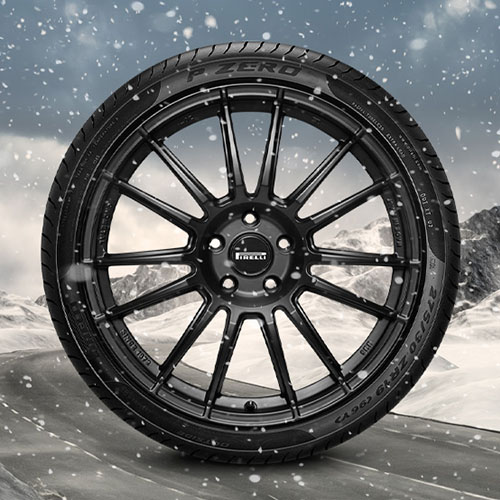
Winter tyres are mandatory in Europe, but making the right choice is not always easy. Some drivers need tyres for slushy city streets, others for forest roads, and some for an entire season of highway driving. The right winter tyre has a direct impact on safety — especially braking distance, handling, and how the car behaves on ice or snow.
In Europe, three types of winter tyres are commonly used: studded tyres, Nordic friction tyres, and Central European friction tyres.
1) Studded tyres
The best choice for drivers who often travel on icy roads or in severe winter conditions.
Pros: best grip on ice, shorter braking distance on slippery surfaces, most stable in extreme conditions.
Cons: noisier, not ideal for clean asphalt, cause more road wear.
2) Friction tyres (non-studded winter tyres)
Friction tyres are quiet and comfortable, making them well suited for city driving and highways where icy conditions are less common.
Pros: quiet, comfortable, good grip on snow and wet roads.
Cons: grip on ice is not as strong as with studded tyres.
3) Central European friction tyres
These tyres are softer and designed mainly for above-zero temperatures and wet conditions. They are not ideal for Estonia — in colder weather, they may become too stiff. They are only suitable if you mainly drive in Central or Southern Europe.
The size of your winter tyres must match the manufacturer’s requirements. The same rule applies as with summer tyres.
You can find the correct size:
The right size means better grip and stability in winter conditions.
The legal minimum tread depth for winter tyres is 3 mm, but in reality, tyres become unsafe before that point.
Recommended: replace your tyres when the tread depth reaches 4–5 mm.
The reason is simple — the shallower the tread, the longer the braking distance and the higher the risk of aquaplaning and slush planing.
A good winter tyre is made from a soft rubber compound that stays flexible even at –20°C. If the tyre becomes hard, it loses grip.
That is why it is worth choosing tyres from manufacturers that produce dedicated Nordic winter tyres.
Among premium brands, strong options include Nokian, Continental, and Michelin.
But the same principle applies across all price categories — what matters is that the tyre is specifically designed as a Nordic type winter tyre.
In winter, safety matters more than in summer. That does not mean you have to buy the most expensive tyre — but choosing the cheapest possible option is rarely worth it in winter.
Premium – best grip on ice and snow
The safest choice, especially if you drive a lot.
Mid-range – best value for money
Good grip on snow and wet roads. Suitable for 80% of drivers.
Budget – suitable for calm city driving
But: budget tyres do not offer the same level of grip on ice as more expensive options.
A good rule is to switch to winter tyres when the temperature drops below +7°C. Why? Because the rubber compound in winter tyres performs best in cold conditions.
Many people buy winter tyres at the last minute, but by then the selection is often smaller.
When ordering from an online store, you can compare prices, filter by size, and choose the right tyre without waiting in line.
In the BEIZ online store you will find:
The right winter tyre depends on your driving style
When choosing tyres, think first about:
Once these points are clear, you will definitely find a tyre that gives you safe and confident driving throughout winter.
Enter your tyre size in the BEIZ online store tyre search and see which winter tyres fit your car. Compare models and find the tyre that gives you confidence on every winter kilometre.


